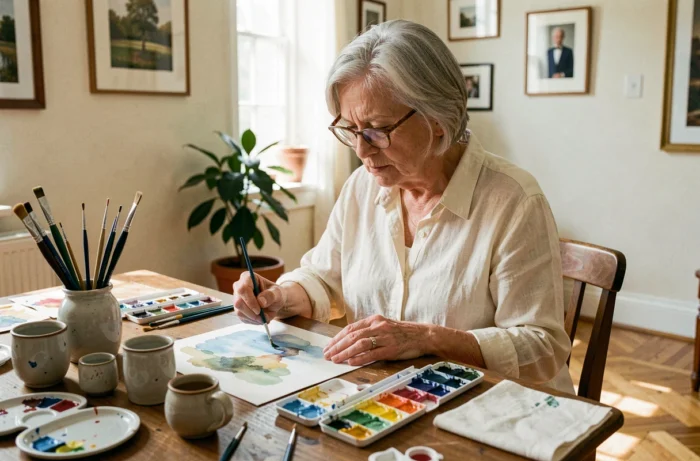
Adapted physical activity has changed its regulatory scope. Since the expansion of the legal framework in 2023, APA no longer only concerns people with long-term illnesses: it also targets seniors presenting risk factors such as sedentariness or hypertension, and those experiencing loss of autonomy. This new framework reshapes how establishments and caregivers can structure the daily lives of residents.
Adapted physical activity in nursing homes: the regulatory framework that traditional activities overlook
Most activity programs in nursing homes are still built around occupational workshops. The APA, supervised by a qualified professional, follows a different logic: each session is tailored to individual functional capacities. The professional assesses joint mobility, postural balance, and cognitive limitations before proposing a protocol.
The medical prescription of APA does not automatically lead to reimbursement by Health Insurance. The initial assessment may be free in a Sports-Health House, but sessions are generally at the expense of the resident or their family. Funding often depends on a mutual insurance company, a local authority, or a pension fund.
This gap between prescription and coverage constitutes the main barrier to regularity. We recommend that establishments formalize agreements with supplementary pension funds to secure access to sessions over time. Without sustainable funding, APA remains a sporadic measure instead of a therapeutic lever.
To better understand the activities offered to seniors beyond just the physical aspect, it is essential to integrate cognitive and social dimensions into a coherent program.
Memory workshops and cognitive games: structuring daily stimulation
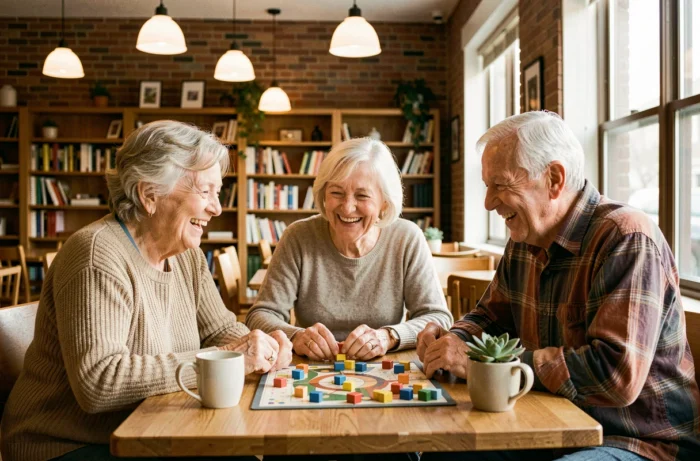
Memory games in establishments often suffer from a lack of progression. A weekly bingo or crossword workshop does not constitute structured cognitive stimulation. The difference lies in the sequencing: alternating exercises of selective attention, working memory, and verbal fluency over cycles of four to six weeks produces measurable results on daily autonomy.
Adapted table tennis illustrates this cross-cutting approach well. This game simultaneously engages eye-hand coordination, divided attention, and postural reactivity. Offered in pairs, it also strengthens social bonds between residents or between a senior and their caregiver.
- Selective attention exercises: sorting cards by color and shape with progressively reduced time constraints, two to three times a week
- Verbal fluency workshops: finding the maximum number of words belonging to a given category in one minute, with rotating themes
- Spatial memory games: reproducing paths on a board or in a room, adapted to the resident’s mobility level
- Adapted table tennis: short sessions in pairs, focused on exchange rather than performance
Regularity takes precedence over the diversity of workshops. Three well-sequenced activities are better than ten scattered animations without a guiding thread.
Hybrid programs for seniors: combining sports, nutrition, and stress management
Hybrid formats are gaining ground in prevention networks. A mutualist program aimed at retirees and pre-retirees combines adapted gymnastics, tai chi, breathing, and stress management with a nutritional component. This holistic approach addresses a clinical reality: sedentariness, poor diet, and anxiety mutually reinforce each other in older adults.
In nursing homes, we observe that residents who participate in a program combining gentle physical activity and adapted culinary workshops maintain their autonomy in daily tasks for a longer time. Preparing a simple meal engages procedural memory, fine motor skills, and planning, three functions that aging gradually erodes.
Nature walks practiced in pairs (senior and caregiver) are offered in several sports-health networks. This format meets two simultaneous objectives: maintaining cardiovascular capacity and breaking the isolation of both the caregiver and the senior. Activity in pairs creates mutual engagement that promotes regularity.
Social connections and activities in nursing homes: going beyond entertainment
Activities in establishments too often fulfill a recreational function without a defined therapeutic objective. Moments of conviviality (snacks, seasonal celebrations, shows) have their place, but they are not enough to counter the effects of chronic loneliness on the mental and physical health of residents.
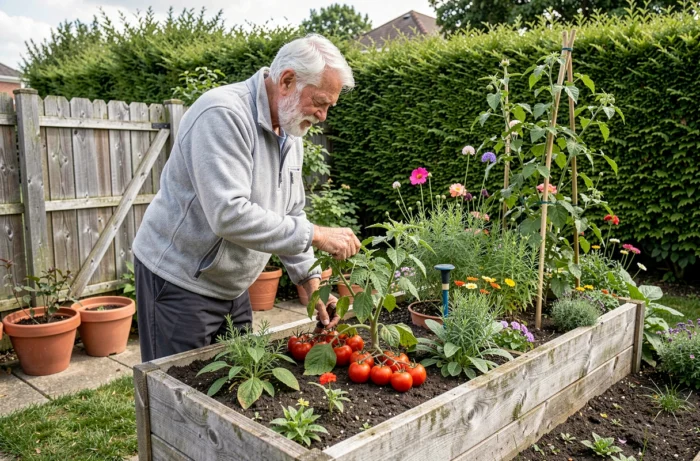
Structuring social connections involves activities with regular engagement where each participant has an identified role. A raised bed gardening workshop, for example, assigns responsibilities (watering, sowing, harvesting) that give the resident a concrete reason to look forward to the following week.
- Intergenerational workshops with schools: shared reading, transmission of manual skills, written correspondence
- Thematic discussion groups led by a psychologist, focused on daily experiences in the establishment
- Time-limited collective projects: creating a herbarium, setting up a photo exhibition, writing a recipe book
A collective project with a visible deadline maintains motivation better than a one-off activity. The project calendar structures time and gives meaning to the days.
Digital inclusion is also progressing in establishments. Simplified devices allow residents to participate in family video conferences or online workshops. The mediation of an animator remains necessary to support the handling without generating frustration.
The daily life of seniors in establishments or at home improves in quality when activities meet a specific objective, whether physical, cognitive, or social. The concrete challenge remains the regular funding of these programs and the training of supervisors, two points on which local decisions make all the difference.