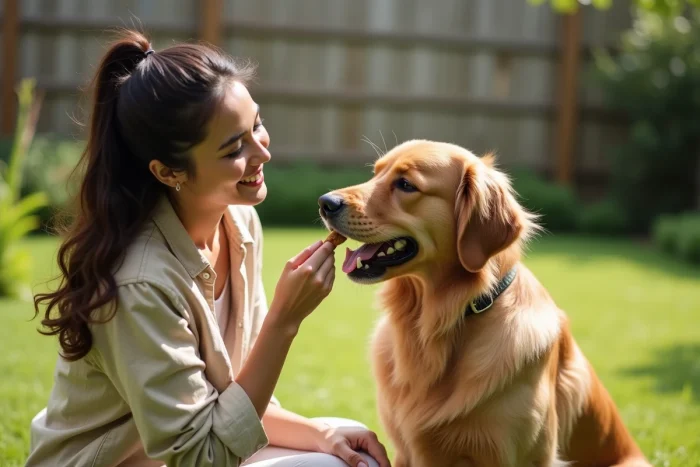
Choosing a dog based solely on its breed to predict its character is becoming an increasingly unreliable approach. A study published in Science on April 29, 2022 (Morris et al.) shows that breed explains a limited share of behavioral variations from one individual to another. The level of early socialization, lineage, and life experiences weigh more on a dog’s temperament than its belonging to a specific breed standard.
Dog Breed and Behavior: What the Data Really Shows
Classic breed profiles assign fixed character traits: the border collie is said to be hyperactive, the cavalier king charles docile, and the malinois difficult to manage for a novice. These shortcuts are based on averages, not on individual certainties.
The Morris et al. study (Science, 2022) analyzed the genome and behavior of thousands of dogs. The result: breed-related genetics predicts only a fraction of the observed behavior. Two labradors from different lineages can exhibit radically opposite temperaments.
| Criterion | Breed-Based Approach | Individual Approach |
|---|---|---|
| Behavior Prediction | Based on group averages | Based on socialization, lineage, life experience |
| Reliability | Limited (small part of variance explained) | Higher according to ethologists |
| Utility for Choosing a Dog | First orientation only | Allows for a choice suitable for the household |
| Main Source | Breed standards, descriptive sheets | Direct observation, behavioral tests |
This table summarizes the gap between two reading grids. The breed profile remains useful for anticipating adult size, coat type, or medical predispositions. However, it is not sufficient for character.
Serious breeders assess the temperament of each puppy individually through tests of reactivity, curiosity, and tolerance to contact. Asking to meet the parents and observing the puppy in real situations provides information that breed descriptions never offer. The information compiled on the Espace Animaux net site allows for cross-referencing breed characteristics with practical advice tailored to each situation.

Dog Nutrition: Why Personalized Nutrition Plans Replace General Advice
The National Order of Veterinarians and the French Association of Veterinarians for Companion Animals (AFVAC) have recommended since 2023 to replace general advice with personalized nutrition plans, developed with a veterinarian. The reason: an increase in cases of obesity and joint disorders in urban companion dogs, linked to overfeeding and table scraps.
A small dog living in an apartment does not have the same caloric needs as a working dog. Adapting the ration to weight, age, actual activity level, and health status requires regular veterinary follow-up.
- The veterinarian calculates the daily ration based on the target ideal weight, not the current weight if the dog is overweight
- Treats must be counted in the total caloric intake, which most owners overlook
- Homemade diets (household ration, BARF) require balancing minerals and vitamins that only a professional can validate
Canine obesity leads to joint complications, heart issues, and a reduced lifespan. High-quality commercial foods, properly dosed, remain safer than unregulated homemade diets.
Puppy Socialization: The Critical Window That Many Underestimate
A poorly socialized puppy during its first weeks develops anxious or reactive behaviors that persist into adulthood. This socialization window, which gradually closes, conditions the dog’s ability to tolerate noises, other animals, children, and unfamiliar environments.
Poor early socialization impacts the dog’s behavior throughout its life. Dog trainers note that the majority of consultations for aggression or excessive fear involve dogs that have not been sufficiently exposed to varied stimuli between the third and twelfth week of life.
Gradually exposing the puppy to new situations (transport, moderate crowds, varied surfaces, household noises) without overwhelming it forms the basis of stable education. House training and basic commands come next, not the other way around.
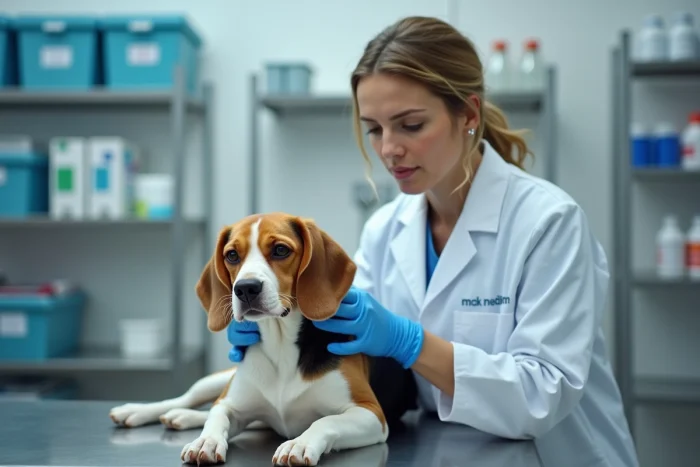
Connected Tools and Veterinary Follow-Up for Dogs: Gadgets or Real Prevention Levers
Since 2024, French mutuals and veterinary platforms have been offering data-driven care plans, based on GPS collars and activity trackers. These tools measure daily exercise levels, rest phases, and behavioral variations that may signal a health problem.
The main interest is not the gadget itself, but the ability to detect an abnormal decrease in activity before it becomes a visible clinical symptom. A dog that gradually reduces its movements over several days may suffer from joint pain, stress, or a silent digestive disorder.
However, these tools do not replace veterinary consultation. The activity tracker complements veterinary follow-up but does not replace it. The data collected serves as support during visits, providing an objective history that the owner could not reconstruct from memory.
- GPS collars allow for real-time tracking of a wandering dog, an asset for breeds with a strong chasing instinct
- Smart kibble dispensers regulate portions and prevent constant snacking
- Activity trackers detect unusual variations in sleep or movement over several weeks
The cost of these devices varies, but their usefulness mainly depends on how regularly the owner consults the data and shares it with the veterinarian.
Adopting a dog remains a commitment for a duration that can exceed ten years. Modern tools and knowledge in ethology provide more reliable benchmarks than preconceived notions about breeds. Cross-referencing individual dog data with regular veterinary follow-up remains the only approach that takes into account the reality of each animal.